
Medical Dermatology and Skin Conditions
In our dermatology clinic, we treat a wide range of skin conditions from inflammatory skin disorders, sun-damage and skin cancer management, Disorder of pigmentation e.g. vitiligo, melasma, Hair and Nail concerns, Pediatric dermatology and skin rashes in pregnant women.
Your skin Health and skin wellbeing is our first priority.
Browse some of our dermatology services:
- Acne
- Rosacea
- Eczema
- Psoriasis
- Skin cancer and Skin Check clinic
- Excessive Sweating
- UVB Phototherapy
- Allergic contact dermatitis and Patch Testing
Acne
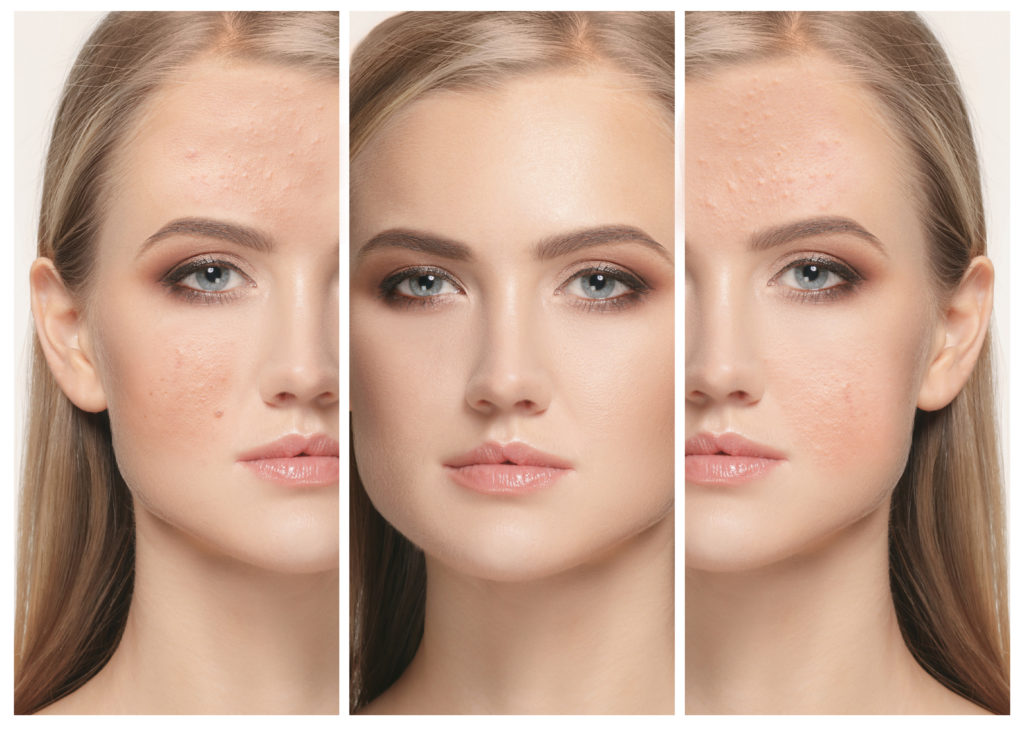
What is Acne
Acne is an inflammatory skin condition that can affect the face, chest, back and shoulders and sometimes neck and upper arms. It can vary from mild, to moderate and severe. It Commonly affects patients in the teenage years, but it can be seen in younger children or can present as adult acne. The good news is that acne is a treatable skin condition and the treatment regimen needs to be individualised for the best outcome.
Acne treatment
Acne management often involves a combination of tailored treatment approaches, depending on the severity and individual skin needs.
These may include medical-grade topical therapies, in-clinic treatments such as superficial peels or extractions, and supportive skincare to help maintain skin barrier health and reduce congestion.
For more persistent or severe acne, prescription-based options may be considered as part of a dermatologist-led treatment plan, following a thorough consultation and assessment.
A consistent, evidence-based skincare routine is an essential part of managing acne and supporting long-term skin health.
Rosacea
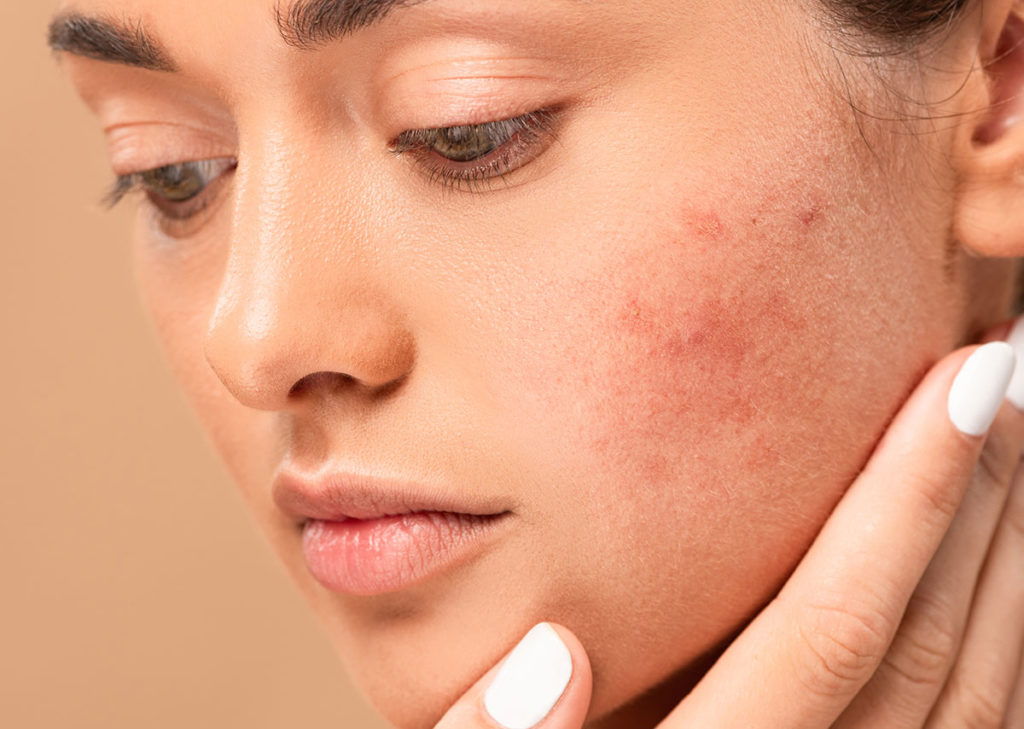
What is Rosacea
Rosacea is a very common and chronic skin condition that affects the face. It usually affects the cheeks, nose, mid forehead and chin (central face) and can co-exist with other conditions such as acne, seborrheic dermatitis and sun-damage. There are different type of Rosacea including:
- erythematotelangiectatis Rosacea presenting with redness, flushing, visible blood vessels.
- Papulopustular rosacea presenting with redness, swelling and acne type pimple and pustules.
- Phymatous rosacea with skin thickness and changed skin texture more prominent on the nose
- Phymatous rosacea with skin thickness and changed skin texture more prominent on the nose
- Ocular rosacea with red and irritated eyes and blepharitis
Rosacea Treatment
Rosacea management focuses on reducing triggers, supporting the skin barrier, and improving visible redness over time.
Treatment plans are individualised and may include daily sun protection, identification and avoidance of common triggers, and a tailored skincare routine designed for sensitive skin.
Depending on your presentation, your dermatologist may also discuss prescription-based options during consultation, alongside in-clinic treatments such as laser therapy to help address visible blood vessels and persistent redness.
The goal is to support long-term skin stability and comfort, with a plan that evolves alongside your skin.
Eczema

What is Eczema
Eczema/atopic dermatitis is characterised by severe itch, redness/inflammation and skin dryness. Most of the time there is a genetic predisposition to get eczema and commonly there is family history or (personal history) of Eczema, asthma and hay fever. Eczema can affect patient of all age categories. Treatment varies depending on the extent and severity of the skin involvement, age and patient’s preferences. There are other types of eczema such as allergic contact dermatitis and irritant contact dermatitis.
Eczema Treatment
Eczema management focuses on strengthening the skin barrier, reducing inflammation, and identifying individual triggers.
General measures include avoiding known irritants, using gentle soap-free cleansers, and maintaining regular use of moisturisers to support skin hydration and barrier function.
When the skin is inflamed, treatment may involve a combination of topical therapies and soothing strategies tailored to your skin. In some cases, light-based treatments may also be considered to help manage inflammation.
For more persistent or severe eczema, additional medical treatment options may be discussed during a dermatologist consultation as part of a personalised care plan.
The aim is to improve skin comfort, reduce flare frequency, and support long-term skin health.
Psoriasis
What is Psoriasis
Psoriasis is a common and chronic skin condition that can affect the skin, scalp, nails, skin folds and in some patients, the joints. Pathophysiology of psoriasis is complex, and multifactorial with a genetic predisposition and environmental factors playing role in presentation of psoriasis. Unfortunately, there is no permanent cure available for psoriasis.
Psoriasis Treatment
Psoriasis management focuses on reducing inflammation, supporting skin function, and improving overall skin comfort.
Treatment plans are tailored to the severity and type of psoriasis, and may include topical therapies and light-based treatments such as phototherapy to help manage symptoms and visible plaques.
For more extensive or persistent psoriasis, additional medical treatment options may be discussed during a dermatologist consultation as part of a personalised care plan.
The aim is to support long-term skin control, reduce flare frequency, and improve quality of life through evidence-based, dermatologist-led care.
Skin cancer and Skin Check clinic
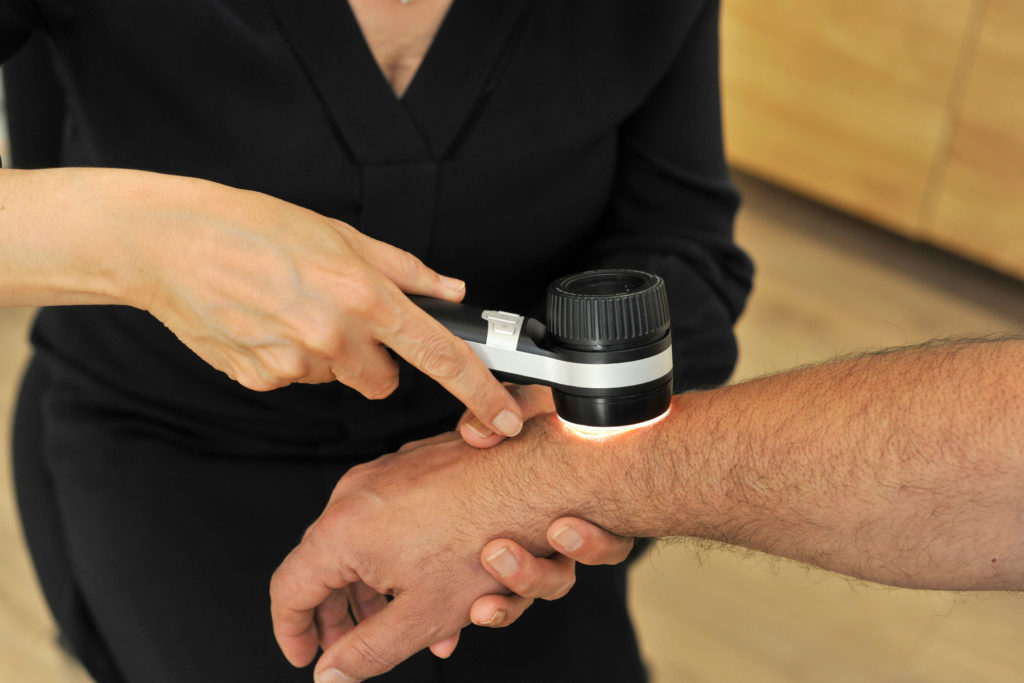
At the skin check clinic our dermatologists Dr Tahereh Taklif, Dr Matthew Howard and our specialist GP Dr Reza Amirtouri undertake our skin checks. All complicated cases will be discussed with and seen by Dr Taklif.
Patients will not require a referral to see Dr Amirtouri for a skin check.
Mole Check
Regular skin checks are important as new moles and changes to existing mole can be a sign of melanoma. Regular Skin checks either done by yourself, your partner or a doctor can discover suspicious moles on time.
Skin cancer (introduction)
Skin cancer is a common concern in Australia, but fortunately most skin cancers can be treated. Some types of skin cancers are more serious and skin cancer monitoring is important. Full skin checks, self-skin checking, early skin cancer detection and effective sun protection are all important components of skin cancer prevention and management.
Different types of Skin cancers
Skin cancers can be broadly divided into two groups:
- Melanomas that originate from melanocytes and occurs as a result of cancerous changes to the Melanocytes. Early detection and diagnosis of melanoma are associated with a greater chance of survival and in a very high cure rate.
- Non- Melanoma skin cancer that originate from other types of skin cells. The most common forms of Non- Melanoma skin cancers are Basal Cell Carcinomas (BCC), Squamous cell Carcinoma (SCC) and Keratoacanthoma (KA)
Skin Cancer Treatment and Management
Skin cancer treatment and management is tailored to the specific type of lesion, as well as its size, location, and individual characteristics.
Treatment options may include surgical procedures, such as excision or specialised techniques, as well as other modalities like radiation therapy where appropriate.
For early or lower-risk lesions and precancerous changes, a range of in-clinic treatments may be considered. These can include targeted removal techniques, cryotherapy, light-based therapies, and topical approaches prescribed as part of a dermatologist-led treatment plan.
Every treatment pathway is carefully selected following a thorough assessment, with a focus on effective management, safety, and long-term skin health.
Sun- spots and sun- damaged skin treatments
Sun damage is one of the most common skin problems that we encounter in Australia. Sun-damage spots can present as dry and rough skin (solar keratosis), redness and prominent capillaries, brown spots (solar lentigines), warty spots (seborrheic keratoses), angiomas(dilated blood vessels presenting as red spots)
Treatment options
We can treat sun-damage skin with a variety of treatment modalities including medical grade chemical peels and Laser, photodynamic therapy, fine wire diathermy and cryotherapy.
Excessive Sweating

Hyperhidrosis
or hyperhidrosis is defined as a degree of excessive sweating that affects activities of daily life. Hyperhidrosis can affect any area of the body, but most commonly affects armpits (axillae), hands and feet (palms and soles).
Hyperhidrosis Treatment
Hyperhidrosis (excessive sweating) can be managed with a range of treatment options, depending on the severity and areas affected.
Initial approaches may include topical treatments, such as clinical-strength antiperspirants, alongside lifestyle adjustments to help reduce triggers.
For more persistent sweating, additional medical options may be discussed during consultation, including oral therapies and device-based treatments such as iontophoresis.
In cases where sweating is more severe or resistant to first-line treatments, further options may be considered as part of a personalised, dermatologist-led treatment plan.
Our focus is on improving comfort, confidence, and day-to-day quality of life through tailored, evidence-based care.
UVB Phototherapy
Narrowband UVB phototherapy delivers a narrow and specific wavelength of ultraviolet light to the skin to treat a number of skin conditions, such as eczema, psoriasis, chronic itch, cutaneous lymphomas and vitiligo. Phototherapy is performed three times weekly for a period of 3 month and for some skin conditions such as vitiligo for up to 6 months and sometimes longer.
Allergic contact dermatitis and Patch Testing
Patch testing is performed at Novus Dermatology to diagnose allergic contact dermatitis. A range of substances, known as allergens, including preservatives, fragrances, dyes etc are included in the Australian baseline series for standard patch test.